
CLAIM: Iran may join “Mecca Agreement” — will Sunni-Shia tensions come to an end?
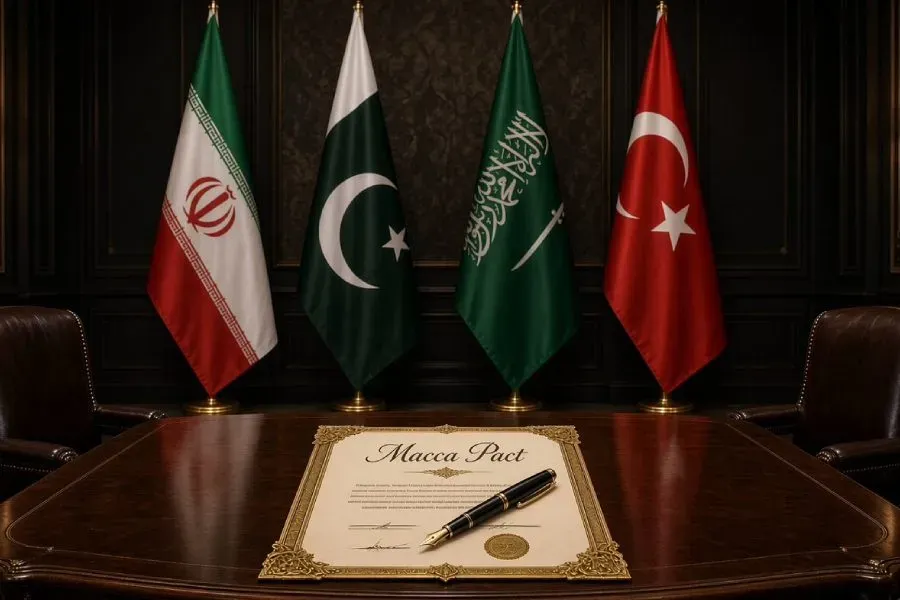
Claims that Iran may potentially join the “Mecca Joint Defence Agreement” signed by Saudi Arabia, Türkiye and Pakistan have raised the prospect of a new geopolitical scenario in the Middle East.
But if Iran joins this security framework, how could the current situation in the world, particularly in the Middle East, change?
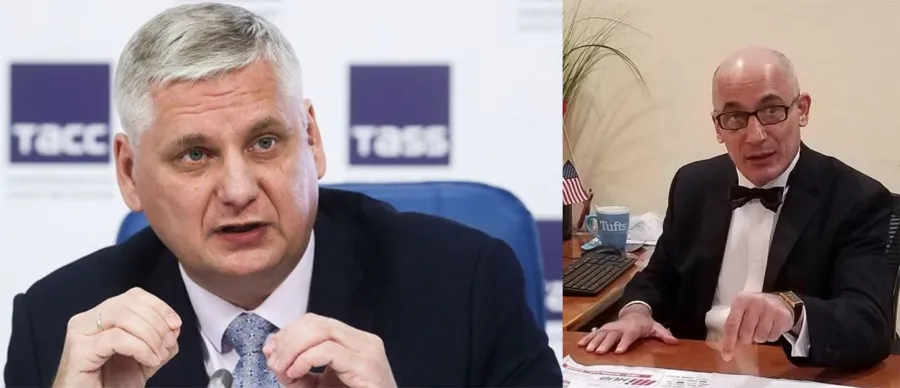
Commenting on the issue to TodayPress TV, political analyst Yusif Bagirzade said that the agreement carries significant political weight and that Iran’s inclusion in the mechanism could fundamentally alter the entire security balance in the region.

He first stressed that the official information has not yet been confirmed:
“The information that Iran has been invited has not yet been fully confirmed. In a statement, the Iranian Foreign Ministry said that it had not received an official invitation, but that there had been proposals for dialogue on regional collective security issues. It is known that the Mecca Agreement itself carries significant political substance. Under the document, an armed attack on any one of the three countries is considered an attack on the other two, and the parties undertake to expand defence cooperation. At the same time, Türkiye and Pakistan have stated that the agreement is not directed against any particular state.”
The political analyst stressed that Iran joining this framework could fundamentally alter the existing trilateral balance. This is precisely what makes Iran’s possible participation particularly interesting:
“If Tehran actually joins this mechanism, the security balance that the agreement could initially create may change completely. In the current trilateral format, Saudi Arabia is Iran’s regional rival, while Türkiye is both a NATO member and a state that simultaneously maintains competition and cooperation with Tehran. Iran’s inclusion could transform this triangle into a broader regional security platform. Such a step could reduce sectarian tensions, but it would also entail certain risks for Tehran. One of the most important consequences of such a framework could be the easing of the line of confrontation between ‘Shiite Iran’ and predominantly Sunni states. Tehran will naturally seek to present this as a practical manifestation of the idea it has long advocated — that countries in the region should create their own security mechanism. Mehdi Rahimi, head of the Iranian parliament’s press service, has also described the creation of a regional ‘security umbrella’ as being in Iran’s interests. However, for this to materialize, the parties would have to overcome significant mutual distrust. At the same time, the potential risks for Iran are also considerable. Joining a collective defence mechanism would automatically create certain obligations, and this could lead to contradictions with some of Tehran’s regional partners and foreign policy priorities.”
The political commentator added that although this step would not automatically turn the bloc into a “Middle Eastern NATO,” it could lay the foundation for a major power center:
“The behavior Iran demonstrates after joining the agreement will also be very important. If Tehran turns it into a platform for regional dialogue, mutual security and de-escalation, this could even be welcomed positively by the United States. Conversely, if Iran attempts to use it to increase its regional military influence, problems will undoubtedly arise. On the other hand, Iran’s participation would not automatically turn this framework into a ‘NATO of the Middle East.’ The current Mecca Agreement does not have a unified command, an integrated military structure or detailed collective defence mechanisms like those of NATO.”
Yusif Bagirzade concluded that, despite all the possibilities, such an alliance would be an important step for the future of the region. In his view, even if Iran joins, a new regional power center could emerge, although it would not necessarily constitute a new military bloc:
“Saudi Arabia’s financial and political weight, Türkiye’s military-industrial potential, Pakistan’s military experience and status as a nuclear power, as well as Iran’s capabilities in missiles, drones and asymmetric warfare, being brought together within the same security framework could significantly alter the balance of power in the region. In general, Iran’s possible participation would be significant in terms of bringing regional rivals to the same table on certain security issues,” he concluded.
It should be noted that the agreement is a trilateral collective defence pact signed by Saudi Arabia, Türkiye and Pakistan in the Saudi city of Mecca on August 7, 2026. Under the agreement, an armed attack against any one of the three countries is considered an attack against all three states.
Turkan Iskandarli
PHOTOS